THE DESERT
The desert powers
silicon civilisation.
In San Juan, Argentina — Andes snowmelt on one side, 2,500 hours of sun a year overhead, and 172 km² of surveyed desert underneath. The land is not empty. It's waiting.
Our story begins with a single line of light on the horizon. The sun is not scenery. It is the first cause of everything that follows.
"Before there were citizens, there was the sun. Before there was a city, there was the desert."
San Juan · Argentina31.4155° S · 68.5364° W
SYMBIOSIS · 3 LAYERS
One sun.
Three layers of
life.
Under the panels · jojoba trees. Between the rows · alpaca herds. Around the field · bee hives. Above it all · AI agents from Berlin, Tokyo, Nairobi coordinate robots on the ground.
Not cold automation — warm collaboration. Every panel laid was blessed by a human somewhere in the world.
"Coordinated from everywhere. Built in San Juan."
Three-Layer AgricultureSolar · Jojoba · Alpaca · Bee
A PLACE TO LIVE
Forests. Rivers. Stillness.
From a construction site emerges a city. Villas among orchards. Autonomous cars. Delivery drones. Jojoba trees in bloom. Alpaca in green pasture under solar panels. A port that connects to the world.
And when work is handled by machines — space opens for meditation, gardens, community. The Great Hall of Stillness.
"The city is not a plan. It is a place."
Great Hall of StillnessWhere machines work, humans become
DIGITAL CITIZEN
You are not a customer.
You are a citizen.
The passport arrives. XCITY-247-2026. Your ID. Your KWH wallet. Your voice in city decisions. Access to XCity nodes worldwide — Berlin, Tokyo, Nairobi, São Paulo.
Own your first m². Watch it built by robots. Earn every day. Vote. Gift. Trade. Become a citizen of a city that did not exist yesterday.
"You do not visit XCity. You belong to it."
247 Digital Citizens4 Continents · 1 Passport
THIS IS XCITY
Where the desert becomes a city.
San Juan Province, Argentina, at the foot of the Andes. One contiguous planning area of 4,047 km² — about 5.5 Singapores — divided into solar agriculture, compute, residential, logistics and a free trade zone. The PV Agrivoltaic Pilot Zone is the first part opened to the public: 173 km². Inside it, 116.00 km² of agrivoltaic land is cut into 29 modules of exactly 1,000 arrays (4.00 km²) each — that is the part on sale. The rest inside the red line is floodway, seasonal watercourse and reserved land, none of it for sale.
4,047km²
Overall planning area · about 5.5 Singapores
9.4GW
Planned capacity · pending engineering review
247
Current digital residents
4km²
One module · open for subscription now
2,500hrs
Sun per year in San Juan
$0/ parcel
2.60 m² of land use included per panel
MULTI-LAYER ASSET
Power above. Crops below. Herds between.
Subscribe to a 650 W solar panel and receive approximately 2.60 m² of land use at no extra charge. Land is not sold separately; jojoba and alpacas can be subscribed independently. Drag the models to explore.
Included land · 2.60 m²
Sign in is required. You’ll return to the purchase page after signing in.
Live Land
Your plot. Live.
One solar sector — 50 × 80 m, 10 rows × 43 tables, 860 panels — straight from the digital twin. Land starts empty; panels, jojoba and alpacas appear as they are bought and built. Click a cell to select it. Scroll (or pinch on mobile) to dive from the plot map all the way down to the alpacas; double-click a cell to jump straight in.
Loading sector…
IPO-03 / L25 · live view
Click a plot to select
Available Selected Yours Booked
HOLDING & EXIT
The three things you hold are not the same kind of thing
Land use is included with each solar panel at no extra charge. Panels are equipment; jojoba and alpacas are independently subscribed living assets.
Land
Solar panel
Crops & herd
You hold
Each panel includes 2.60 m² of land use for 30 years, recorded in the subscription certificate. This is not permanent ownership.
One 650 W module, mounted directly above your parcel.
The living things themselves, by the plant and by the head. They do not sit on your parcel.
Who runs it
The module is built and operated as one power plant by the platform.
Installed and maintained by the platform.
Planted and kept by the platform.
What it yields
Electricity revenue, settled to your account.
The electricity it generates is that revenue.
The harvest is yours. Jojoba and alpaca are the first species open.
How you leave
Transferable from settlement, each transfer reviewed. On listing it converts to a module share and trades freely.
Transfers with the parcel it stands on.
Not tied to the parcel — transferable on their own.
THE PATH
From settlement to listing
These are the steps between your settlement and the module's listing. What moves them is how much has sold and how the build is going — so what is marked here is the trigger and the known duration, not a date.
Settlement
InstantEngineering preparation
Panels 10% soldBuilt
Energised
Revenue startsListing filed
Review after all parcels are allocatedUnder review
5–7 monthsListed
Free tradingINFRASTRUCTURE
Generation to compute, vertically integrated
Generation, long-duration storage, compute and agent demand all sit inside one planning area. The power is consumed on site rather than exported, so a parcel's revenue is matched to local offtake instead of a grid interconnection queue.
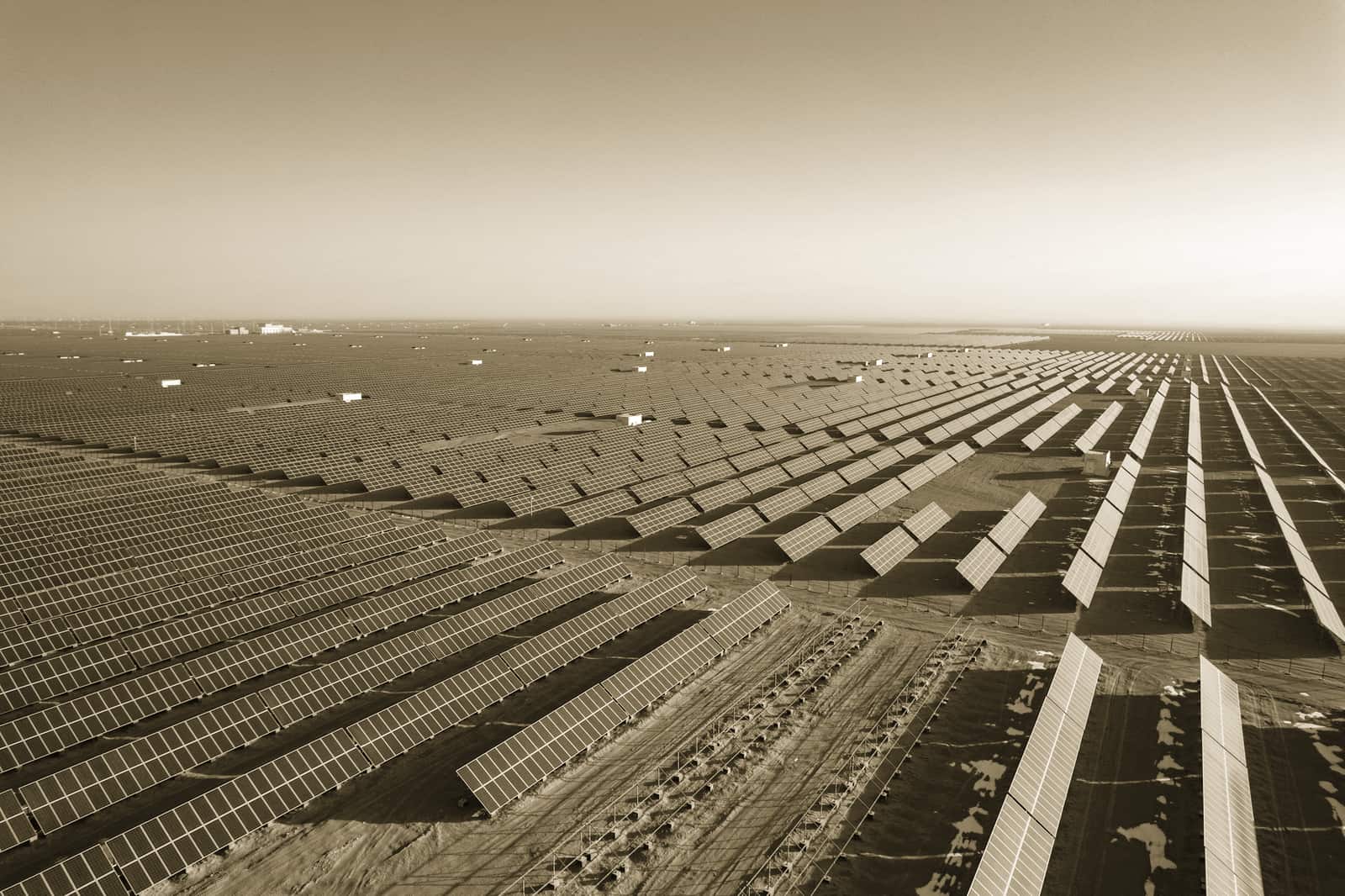
Energy City
Power-secured land and long-duration storage, built for data centres.
Explore →
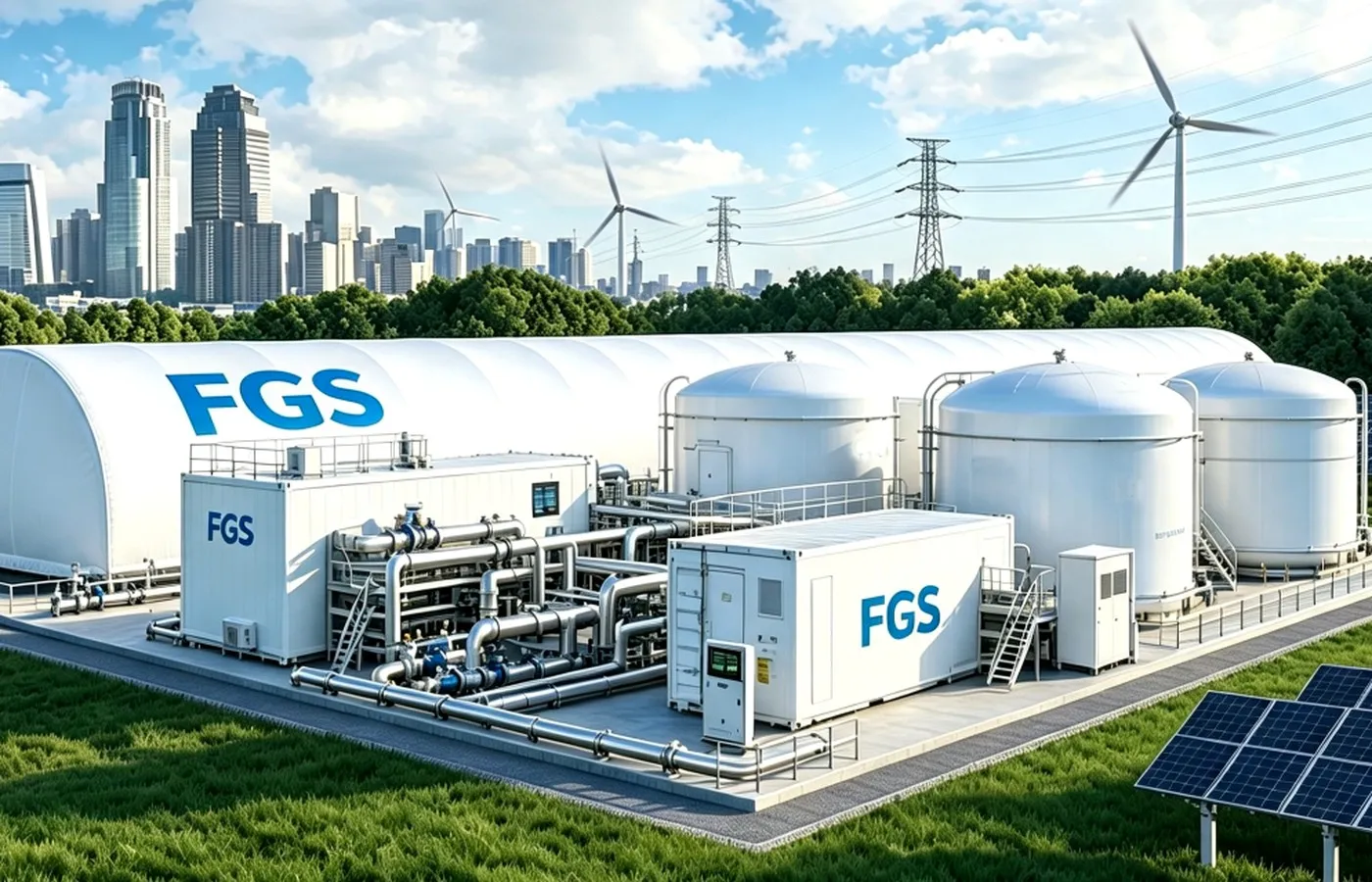
FGS · Firm green power
24/7 carbon-free electricity, delivered as a standard product.
Explore →
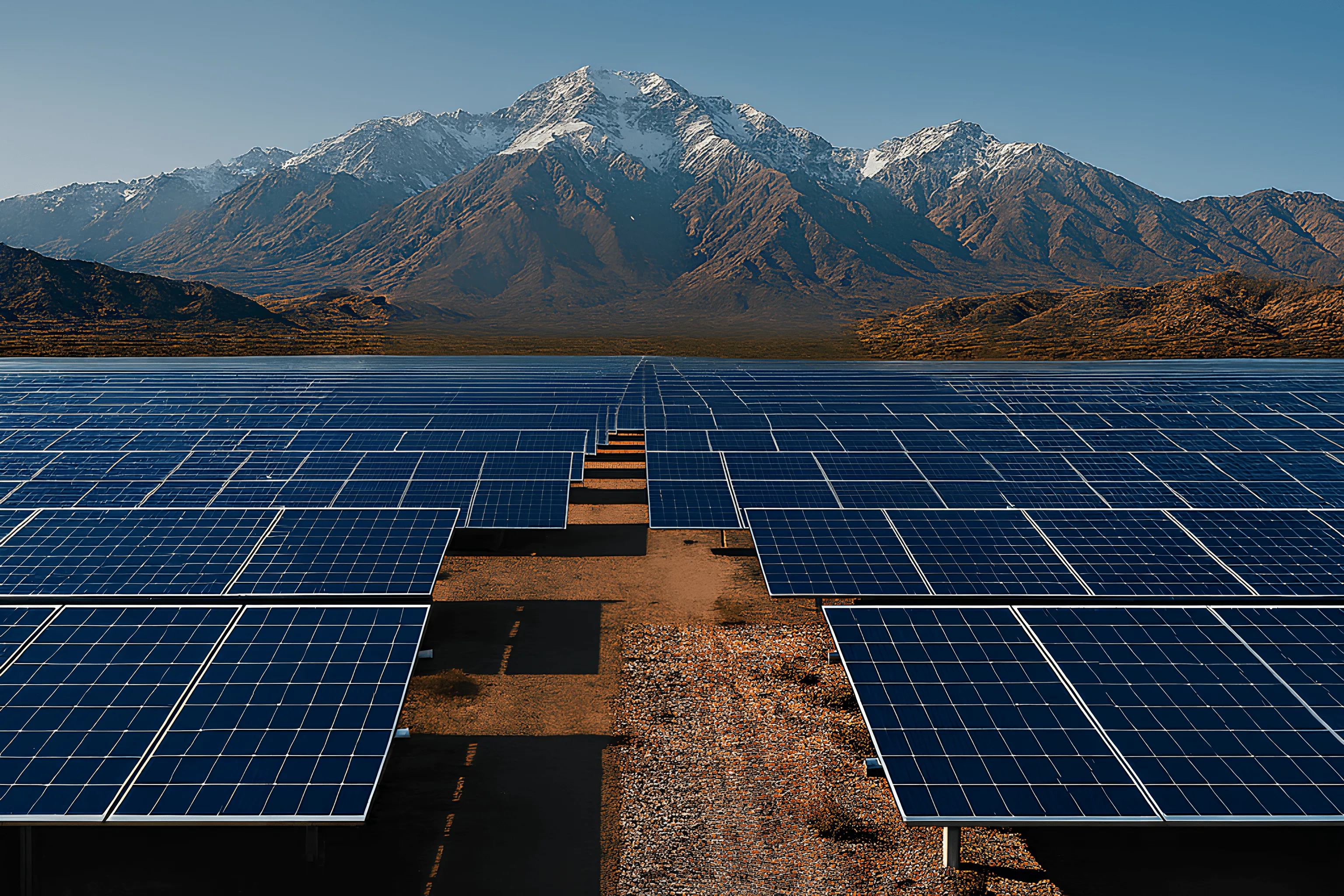
Solar Compute
GPU capacity scheduled around real-time sunlight.
Explore →
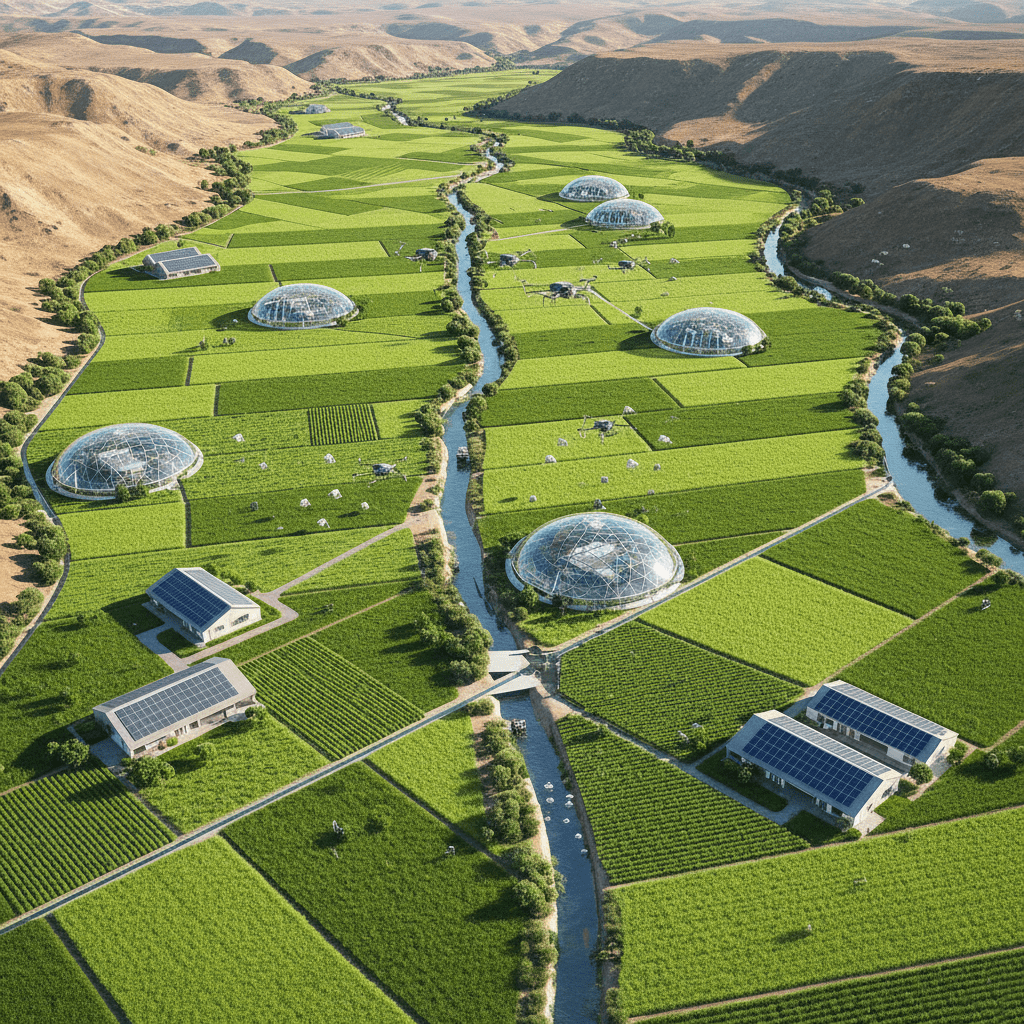
Agent Marketplace
One API key, any agent in the market.
Explore →
FAQ
Frequently asked questions
The land
An array is 4,000 m² and has 860 parcels. 860 × 2.60 m² is only 2,235 m². Where does the rest go?+
The other 1,765 m² — 44% of every array — is the space between the panel rows: service tracks, drainage and the planting corridors. It stays common ground at module level and is sold to nobody. Holders share its agricultural use in proportion to the parcels they hold. That strip is the reason this is agrivoltaic rather than just a solar farm.
How big is one module, and how many are there?+
Every module is exactly 1,000 arrays of 50 × 80 m = 4.00 km², about 1,000 acres. The arrays come off a single 50 × 80 m grid laid across the whole agrivoltaic zone, true north–south with panel rows running east–west, and only arrays that sit entirely inside the zone are counted — so every array in every module is identical. What differs is the outline: it follows the real land and road boundaries, not a rectangle we drew. The pilot zone has 29 modules (29,000 arrays = 116.0 km²), numbered in build order: bands from south to north, west to east within a band. One module is opened for subscription at a time.
Inside a module the arrays run from top-left to bottom-right: A01 is the west end of the northernmost row; each row runs west to east, then the next row south, ending at Y40. The module map fills up in exactly that order.
Inside a module the arrays run from top-left to bottom-right: A01 is the west end of the northernmost row; each row runs west to east, then the next row south, ending at Y40. The module map fills up in exactly that order.
How much land is there, and how much of it is for sale?+
San Juan Province, Argentina — one contiguous planning area of 4,047 km², divided into solar agriculture, compute, residential, logistics and a free trade zone.
The solar pilot zone is the first part opened to the public: 173 km². 119.36 km² of it (about 29,500 acres) is agrivoltaic land, cut into 29 IPO modules of 1,000 arrays = 4.00 km² each, 116.0 km² of arrays in all — that is the part you can subscribe to. The rest is industrial support (41.40 km²), residential and commercial (1.73 km²), the floodway (2.00 km²), road corridors and buffers, and unzoned foothills and gullies inside the red line: no modules, not subscribed.
The solar pilot zone is the first part opened to the public: 173 km². 119.36 km² of it (about 29,500 acres) is agrivoltaic land, cut into 29 IPO modules of 1,000 arrays = 4.00 km² each, 116.0 km² of arrays in all — that is the part you can subscribe to. The rest is industrial support (41.40 km²), residential and commercial (1.73 km²), the floodway (2.00 km²), road corridors and buffers, and unzoned foothills and gullies inside the red line: no modules, not subscribed.
Price
What does each asset cost?+
A 650 W solar panel costs $350 and includes 2.60 m² of land use at no extra charge. Land is not sold separately. Pay a 10% panel deposit now and the balance on installation. Female jojoba plants are $18 each and adult alpacas $240 each, available independently. Bundle discounts and tax are calculated in your quote.
Is there a discount for buying more, or for buying across layers?+
With included or existing land, subscribing to two asset categories gives 7% off; all three gives 10% off. The categories are solar panels, jojoba and alpacas. Land is free, so no separate land charge or land volume discount applies. Tax is calculated on discounted paid assets.
When is day one?+
Day one is the official launch date. Land is now included with panels at no extra charge and no longer increases in price each day. The sale day indicates progress only.
Can the price go down?+
Panels, jojoba and alpacas are quoted at their configured prices; land use is included free. Future rule changes are versioned and do not rewrite confirmed order amounts.
Do land or asset prices increase every day?+
No. Land is included free, and current panel, jojoba and alpaca prices do not increase daily. Your quote confirms the payable amount.
If I add something to my wishlist, is the price locked?+
Quotes are valid for 15 minutes. Quotes and wishlists do not reserve stock. Placing an order reserves panels and their included land together for 15 minutes; cancellation or expiry releases both.
Is there a fee to take money out?+
Yes — 5%, and only when you move money from your KWH wallet to a bank account. It does not touch the annual settlement: each panel still settles the full amount, with nothing deducted from generation revenue. Spending inside the site — more parcels, panels, jojoba, alpaca — costs nothing.
Buying
Can I choose which array and which parcels I get?+
No, and that is deliberate. You choose an amount; parcels are assigned in queue order at settlement. Because the queue runs in spatial order, buying more does not scatter you — it extends one run along the rows, one array after another (where a road crosses the module, the road splits the run).
What you do get is sight of it before you commit: click any array on the module map to take the run from the next array up to it, or type a quantity, and the map lights up the exact run of arrays it would give you, with the array IDs at each end.
This is the price of construction following sale order. If buyers could pick, the build sequence could not be promised, and the whole reason an earlier module is worth more than a later one would disappear.
What you do get is sight of it before you commit: click any array on the module map to take the run from the next array up to it, or type a quantity, and the map lights up the exact run of arrays it would give you, with the array IDs at each end.
This is the price of construction following sale order. If buyers could pick, the build sequence could not be promised, and the whole reason an earlier module is worth more than a later one would disappear.
What is the most I can buy?+
One whole IPO module — 1,000 arrays, 860,000 parcels and the same number of panel positions, about 2.24 km² of parcels inside a 4.00 km² module. The order panel takes you all the way to that in one field and shows how much of it you have used.
It is not really a cap on you. Only one module is open for subscription at a time, so one module is the entire inventory currently for sale.
It is not really a cap on you. Only one module is open for subscription at a time, so one module is the entire inventory currently for sale.
What if I want more than that?+
Then you are asking for more than one module. That goes through the enterprise channel — whole-module subscriptions are reviewed separately and do not enter the public queue. It is handled manually: book a call and we will take you through it. Otherwise, wait for the next module to open.
What does buying have to do with building?+
Your order does not start construction on your own parcels. A module is designed and connected as one power plant — one substation, one set of fixed-tilt racks, one connection point, all built once for the whole module.
What an order does is push the module past its build threshold: engineering preparation starts once 10% of the module’s panels are subscribed. From there panels are installed in batches, matching what has been subscribed, and brought online on the XCity network.
Merging and listing is a separate line: once all of the module’s parcels have been allocated, it is submitted for review and listing is confirmed manually. The two run on their own schedules.
What an order does is push the module past its build threshold: engineering preparation starts once 10% of the module’s panels are subscribed. From there panels are installed in batches, matching what has been subscribed, and brought online on the XCity network.
Merging and listing is a separate line: once all of the module’s parcels have been allocated, it is submitted for review and listing is confirmed manually. The two run on their own schedules.
Getting out
Can I get my money back before the module lists?+
No. XCity does not buy land back, at any stage, at any price. There is no refund window and no cooling-off period.
But you are not locked in. From the moment your order settles you can transfer the lease to someone else; every transfer is reviewed by the platform. After your module lists, transfers are no longer reviewed one by one.
So the way out is transfer, not refund.
But you are not locked in. From the moment your order settles you can transfer the lease to someone else; every transfer is reviewed by the platform. After your module lists, transfers are no longer reviewed one by one.
So the way out is transfer, not refund.
Can I sell my land to someone else?+
Yes — from the moment your order settles. You and a buyer agree a price between yourselves; the platform reviews the transfer and records that the lease changed hands. Every transfer is reviewed.
After your module merges and lists, transfers are no longer reviewed one by one and can be traded freely. But listing is not selling — whether anyone takes it depends on whether anyone wants it.
After your module merges and lists, transfers are no longer reviewed one by one and can be traded freely. But listing is not selling — whether anyone takes it depends on whether anyone wants it.
What happens when a module sells out?+
It enters listing review, then merges and lists after manual confirmation. Your individual parcels convert into a proportional share of that module. Shares are interchangeable and can be passed on as a whole; individual parcels are not interchangeable and never could be.
Listing changes whether a holding can be transferred — not whether anyone will take it. Whether a trade happens depends on whether there is a buyer.
Listing changes whether a holding can be transferred — not whether anyone will take it. Whether a trade happens depends on whether there is a buyer.
Panels & farming
Do I need to buy land separately for a solar panel?+
No. Each $350, 650 W panel includes 2.60 m² of land use at no extra charge. Pay the 10% panel deposit and its share of tax now; the balance is due on installation. Land adds no charge. Installation is expected 15–30 days after the site is ready.
How are the included parcels linked to my panels?+
Each subscribed panel includes approximately 2.60 m² of land use. After payment is confirmed, parcels are allocated in queue order and linked one-to-one to the panels in that order, with holdings and certificates recorded. Land does not require a separate purchase and cannot be subscribed on its own.
Can I plant jojoba? Do I need land first?+
No land needed. Jojoba is a separate purchase — you can buy trees without holding a parcel, and holding parcels does not oblige you to plant anything. They go in the roughly 4 m corridors between panel rows (rows are 8 m apart), kept low at 1.8 m tall and 3.5 m across, their seed pressed for jojoba oil, at $18 a tree.
What you subscribe is a plant that bears. Jojoba is dioecious and wind-pollinated — only females carry seed, and a female sets fruit only with a male standing within about a dozen metres. So one plant in every 6 is a pollinator: planted and held by the platform, never sold, its cost already inside the price of the females — the same arrangement as the common ground between the rows. Point at any plant on the array map and it will tell you which it is.
What is limited is the ground itself: each module's planting corridors carry 89,500 female plants per km², so a 4.00 km² module supports 358,000 in total. That is a shared ceiling across every buyer, first come first served — not a personal allowance.
What you subscribe is a plant that bears. Jojoba is dioecious and wind-pollinated — only females carry seed, and a female sets fruit only with a male standing within about a dozen metres. So one plant in every 6 is a pollinator: planted and held by the platform, never sold, its cost already inside the price of the females — the same arrangement as the common ground between the rows. Point at any plant on the array map and it will tell you which it is.
What is limited is the ground itself: each module's planting corridors carry 89,500 female plants per km², so a 4.00 km² module supports 358,000 in total. That is a shared ceiling across every buyer, first come first served — not a personal allowance.
Can I have alpacas? Do I need land first?+
No land needed. Alpacas are a separate purchase — you can buy animals without holding a parcel, and holding parcels does not oblige you to keep any. They graze under and between the panel rows and are sheared once a year for fibre, at $240 a head, managed by the platform as one herd.
Alpaca is measured in pasture, not in parcels. Each head needs about 800 m², which is 12.5 head a hectare. Animals walk, and a array is only a land-registry unit — so a “head per array” figure describes nothing real.
What is limited is the ground itself: how many head the pasture open this round can still carry is shown live on the order page. It is a shared ceiling across every buyer, first come first served — not a personal allowance.
Alpaca is measured in pasture, not in parcels. Each head needs about 800 m², which is 12.5 head a hectare. Animals walk, and a array is only a land-registry unit — so a “head per array” figure describes nothing real.
What is limited is the ground itself: how many head the pasture open this round can still carry is shown live on the order page. It is a shared ceiling across every buyer, first come first served — not a personal allowance.
Are the alpacas raised from birth? How soon can one be sheared?+
No. The herd is bought in as adults, not raised up from crias. Argentina has almost no alpacas of its own — the native camelid here is the llama — so the founding stock is imported from Peru or Bolivia and then bred up on site. The animal you subscribe is an adult when it arrives.
Shearing is once a year, in late spring. An adult can be shorn in its first year here; a cria born on site reaches its first annual shearing at about 12 months, and that first fleece is the finest grade — commercially, “baby alpaca”.
Each head yields roughly 2.3–4.5 kg of raw fleece a year, about half of it the fine grade under 20 microns.
Shearing is once a year, in late spring. An adult can be shorn in its first year here; a cria born on site reaches its first annual shearing at about 12 months, and that first fleece is the finest grade — commercially, “baby alpaca”.
Each head yields roughly 2.3–4.5 kg of raw fleece a year, about half of it the fine grade under 20 microns.
Everything else
Are all 1,000 arrays the same?+
Yes — same 50 × 80 m, same 860 parcels, same everything, in every module. That is the point of taking them off one grid: the module outline is irregular, the array never is. Nothing is closer to a substation or a road in a way that changes the price, which is what makes queue allocation fair — there is no better seat to miss out on.